Umm al-Khair
South Hebron Hills, 2023
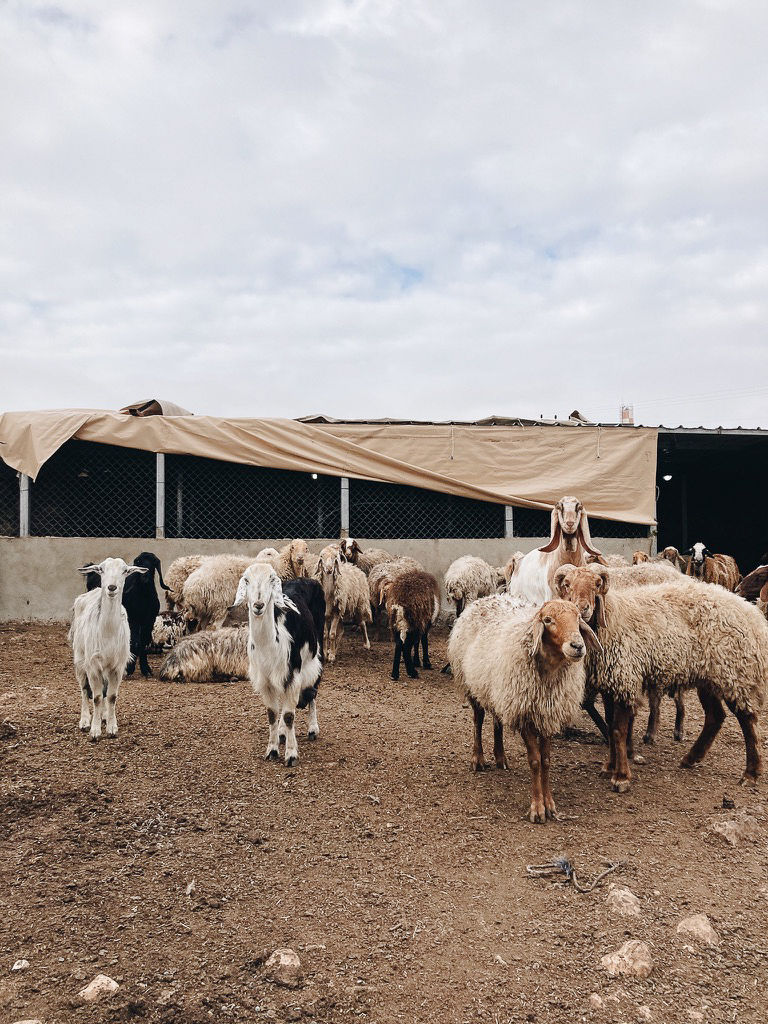
A Palestinian Bedouin village in the occupied West Bank.
Umm al-Khair is a Palestinian Bedouin village in the South Hebron Hills, in the occupied West Bank. It was founded by families who were expelled from the Naqab/Negev desert in 1948, during what Palestinians call the Nakba, or catastrophe, and who later bought land in the area, then under Jordanian rule (Peace Now).
The village is one of nineteen hamlets that make up Masafer Yatta, featured in the Oscar-winning documentary film No Other Land. It sits directly adjacent to Carmel, an Israeli settlement established in the 1980s with about 470 residents (City Population). Carmel is connected to Israel's electric grid. Umm al-Khair, home to roughly 200-300 people, is not, and its water supply is frequently cut off (Waging Nonviolence).
Israeli authorities have demolished 56 structures in the village over the past 15 years, according to the UN, and in October 2025 issued demolition notices for 13 more, including 11 homes (Peace Now). In the early 1980s, Israel declared about 4,000 dunams of surrounding land state land for the settlements of Carmel and Ma’on. Residents say settlers now prevent them from grazing their flocks there (Awdah Hathaleen).
The village’s former leader, Hajj Suleiman Hathaleen, died in January 2022 after he was struck by an Israeli police tow truck in the village (The Nation). Awdah Hathaleen, a teacher and one of the village’s community leaders, described Umm al-Khair’s approach as nonviolent resistance.

Umm al-Khair, with the settlement of Carmel on the hill beyond.

A volunteer with All That’s Left, a Jewish anti-occupation collective, removes debris from a building site.

Ahlan wa-sahlan, welcome. The bus honors Hajj Suleiman al-Hathaleen, a leader in Umm al-Khair's nonviolent resistance. He was killed in 2022 when an Israeli tow truck ran him over.


Update, July 2025
On July 28, 2025, Awdah Hathaleen, a 31-year-old teacher, father of three, and one of the village’s leading nonviolent activists, was fatally shot by Israeli settler Yinon Levi. Awdah was 35 meters from where Levi stood. The killing was filmed by Awdah himself and by other residents and activists.
Levi was placed under house arrest for three days and released without charges. Israeli authorities withheld Awdah’s body for ten days before allowing his burial. In the days after, more than a dozen young men from the village were detained.
Settlement construction adjacent to the village has continued. Its residents face persistent threats from settler attacks, including arson, damage to crops, and the theft of farm animals. Yinon Levi has since returned to the village multiple times.