Umm al-Khair
South Hebron Hills, 2023
A Palestinian Bedouin village in the occupied West Bank.
Umm al-Khair is a Palestinian Bedouin village in the South Hebron Hills, in the occupied West Bank. Its name means Mother of Goodness. The community was founded by families expelled from the Naqab/Negev desert during the Palestinian Nakba of 1948, who purchased the land and settled there in the 1950s.
The village is one of nineteen hamlets that make up Masafer Yatta, featured in the Oscar-winning documentary film No Other Land. It sits directly adjacent to Carmel, an Israeli settlement established in the 1980s. Carmel has paved roads, Israeli electricity and water, and close to 700 residents with Israeli citizenship. Umm al-Khair, on the other side of the fence, has watched its population decline from over 600 residents to 250 in the last ten years. Nearly every structure in the village carries a demolition order.
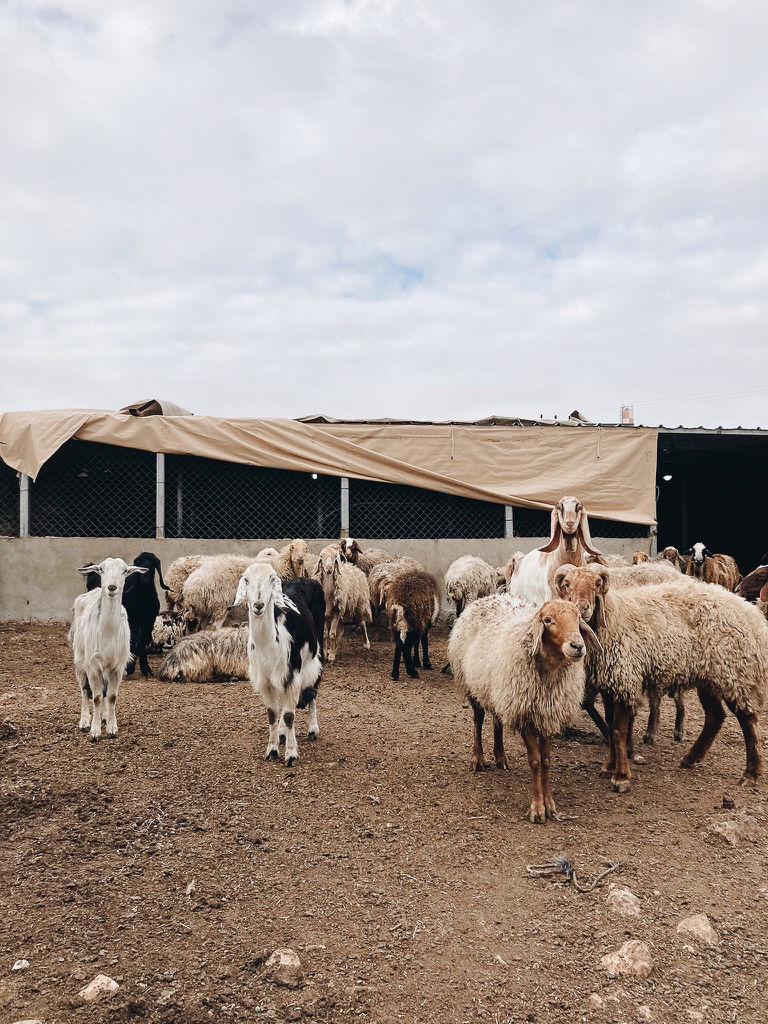
The community can no longer shepherd. The grazing land was declared Israeli state land, and only Israeli shepherds now use it.
Umm al-Khair is committed to nonviolent resistance. Its previous community leader, Hajj Suleiman Hathaleen, was killed in January 2022 when an Israeli tow truck ran him over during an operation in the village.
The first time I visited Umm al-Khair was with All That’s Left, a collective of Jewish and anti-occupation activists, on a solidarity work day.

Umm al-Khair, with the settlement of Carmel on the hill beyond.


Ahlan wa-sahlan, welcome. The bus honors Hajj Suleiman al-Hathaleen, a leader in Umm al-Khair's nonviolent resistance. He was killed in 2022 when an Israeli tow truck ran him over.


in memory
On July 28, 2025, Awdah Hathaleen, a 31-year-old teacher, father of three, and one of the village’s leading nonviolent activists, was fatally shot by Israeli settler Yinon Levi. Awdah was 35 meters from where Levi stood. The killing was filmed by Awdah himself and by other residents and activists.
Levi was placed under house arrest for three days and released without charges. Israeli authorities withheld Awdah’s body for ten days before allowing his burial. In the days after, more than a dozen young men from the village were detained.
Settlement construction adjacent to the village has continued. Its residents face persistent threats from settler attacks, including arson, damage to crops, and the theft of farm animals. Yinon Levi has since returned to the village multiple times.